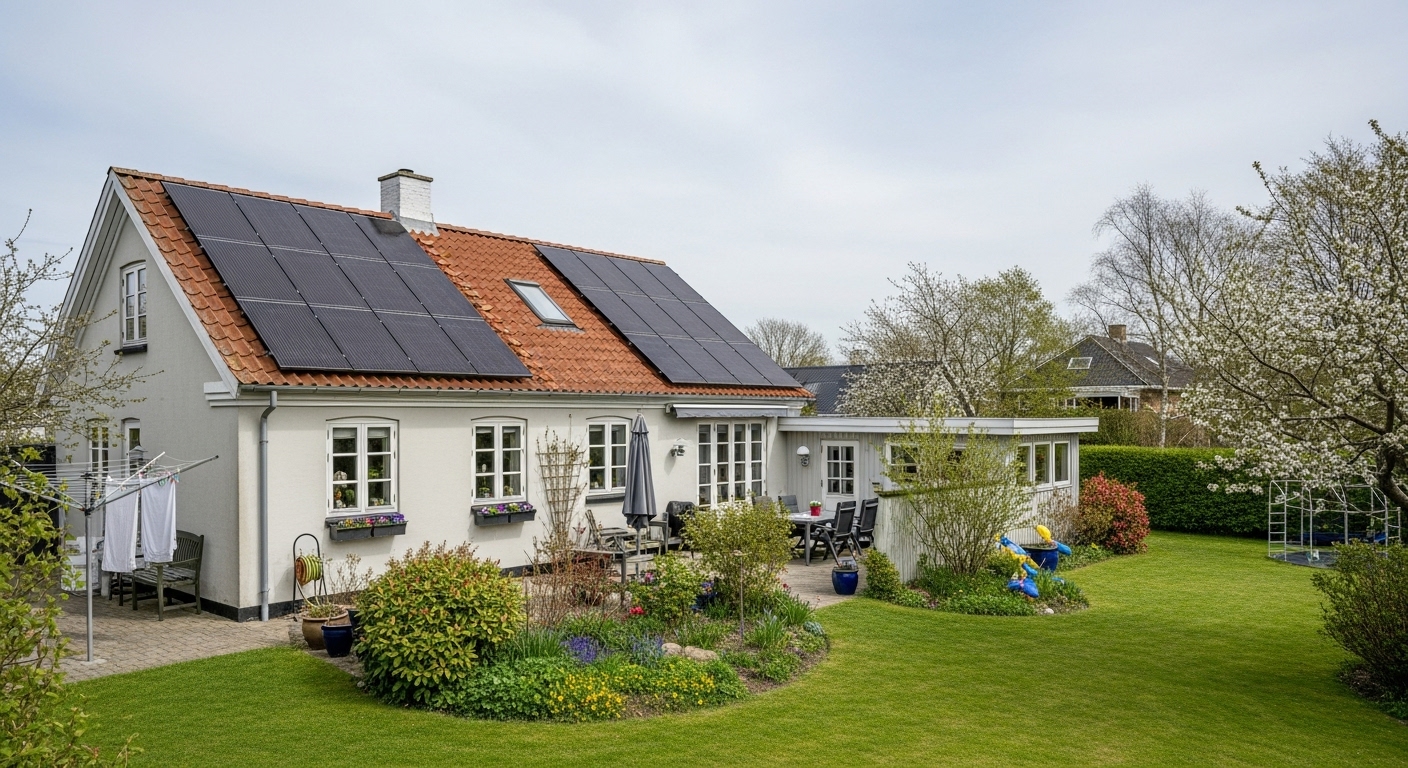
What is the difference between using electricity yourself and selling it to the grid
What is the difference between using electricity yourself and selling it to the grid?
When you have solar panels on your roof, you produce your own electricity – but what happens when you produce more than you consume? Here, the choice is between two options: Use the electricity yourself (self-consumption) Sell the electricity to the grid Both have economic significance, but the difference between them can be greater than many think.
1. Self-consumption provides the greatest value
When you use the electricity directly in your home – e.g., for the washing machine, refrigerator, or charging an electric car – you save the full electricity price. This includes both the energy price, grid fees, and VAT. In 2025, the total electricity price is typically DKK 2.20–2.80/kWh. Example: If you use 5,000 kWh yourself, you save 5,000 x DKK 2.50 = DKK 12,500 annually
2. Electricity sales to the grid provide lower settlement
When you don't use the electricity yourself – typically in the middle of the day – you sell it to the grid. Here, you only get the energy price itself. In practice, this means you are settled at approx. DKK 0.80–1.20/kWh, depending on the electricity exchange prices, balancing agreement, and any broker (who takes a small commission). Example: If you sell 3,000 kWh to the grid at DKK 1.00/kWh, you earn DKK 3,000 annually
3. Battery and grid balancing: Optimization of both
With a battery and a grid balancing agreement (often via a third party), you can store the surplus electricity and use it in the evening or sell it at times when the electricity price is high. This can mean: More electricity used in the home (increased self-consumption from e.g., 30% to 65%) Sales to the grid during "expensive hours" → higher settlement Typical extra gain: DKK 3,000–5,000 annually
4. Economic significance in practice
Let's look at two examples with a 10 kWp solar panel system on a house with 8,000 kWh electricity consumption:
5. Conclusion: Use first, sell later
The more electricity you use yourself – or store with a battery – the greater your financial gain will be. Selling electricity is fine as a supplement, but it is self-consumption and intelligent control that really make the difference. 👉 At EcoRay, we help you find the right balance between self-consumption, battery solution, and sales strategy – based on your goals and your consumption pattern.