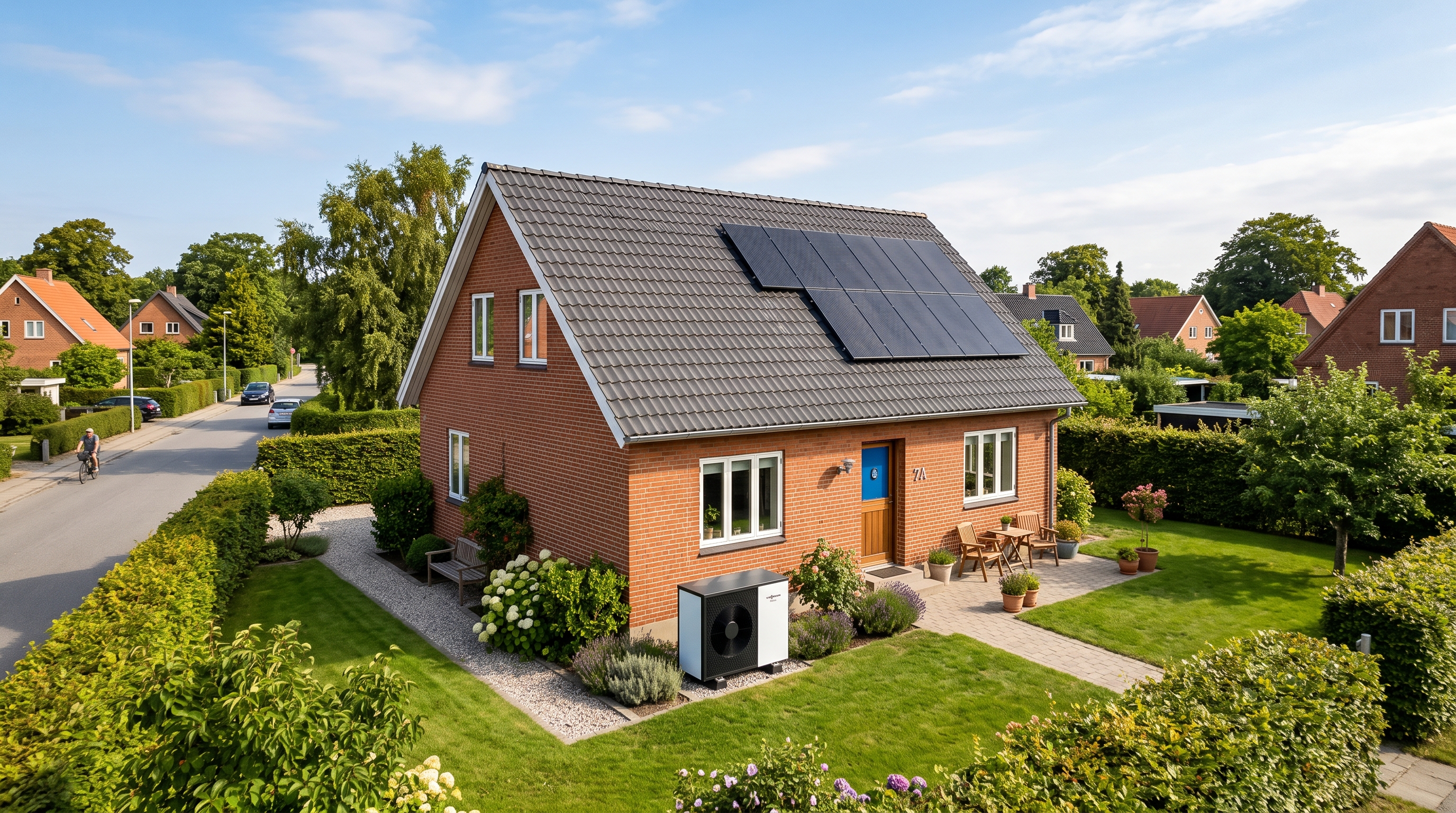
Heat Pump vs Solar Panels in 2026: Which Should You Choose — and Why Not Both?
Heat Pump vs Solar Panels in 2026: Which Should You Choose — and Why Not Both?
Every cautious homeowner faces the same dilemma: You want to do right by both your wallet and the planet, but your budget might only stretch to one big investment right now. Heat pump or solar panels?
Here's an honest, numbers-based comparison — no sales fluff, just real 2026 figures. We compare both options across cost, savings, payback time, lifespan, comfort, maintenance, and carbon reduction. And at the end, we show why combining both actually makes the most sense for most homes.
What's the Difference, Really?
Before we dive into the numbers, a quick summary:
Heat pump (air source): Replaces your gas or oil boiler. It extracts heat from the outside air and uses it to warm your home and hot water. It runs on electricity — roughly 1 kWh of electricity delivers 3-5 kWh of heat. It's your heating bill that drops.
Solar panels: Generate electricity from sunlight. That power runs everything in your home — including a heat pump if you have one. It's your electricity bill that drops.
In short: The heat pump reduces your heating needs. Solar panels supply the electricity. They solve two different problems.
Comparison: Cost and Installation
| Parameter | Heat Pump (Air Source) | Solar Panels (4 kWp) |
|---|---|---|
| Typical price incl. installation (2026) | £8,000-12,000 | £5,000-7,000 |
| Government grants (UK: BUS/ECO, IE: SEAI) | £7,500 (Boiler Upgrade Scheme) | £0 (VAT relief only) |
| Net cost after grants | £500-4,500 | £5,000-7,000 |
| Installation time | 2-5 days | 1-2 days |
| Requires groundwork? | No (air source) | No |
| Noise? | Outdoor unit hums (35-55 dB) | None (inverter in utility room) |
| Space requirements | Outdoor unit (~1x1m) + indoor unit | Roof space ~20 m² |
Bottom line: Solar panels cost less upfront. Heat pumps cost more but tackle your heating bill directly — often the biggest line item in your household budget. However, the UK's Boiler Upgrade Scheme dramatically reduces heat pump net cost.
Comparison: Annual Savings
This is where it gets interesting. We'll use a typical UK 3-bed semi-detached house with a gas boiler and 4,000 kWh/year electricity usage.
Savings with heat pump
| Before (gas boiler) | After (heat pump) | Saving |
|---|---|---|
| 12,000 kWh gas/year | 3,600 kWh electricity/year | - |
| Gas cost: 12,000 x 7p = £840 | Electricity: 3,600 x 24p = £864 | -£24/year (near parity) |
Note: At 2026 UK energy prices, a heat pump running at SCOP 3.3 roughly breaks even with a modern gas boiler on running costs. The real saving comes if you pair it with solar panels or if gas prices rise further — which most analysts expect.
Savings with solar panels
| Before | After (4 kWp solar panels) | Saving |
|---|---|---|
| 4,000 kWh x 24p = £960 | Self-consumption 40%: 1,600 kWh | - |
| Grid import: 2,400 kWh x 24p = £576 | - | |
| Export (SEG/CEG): 2,400 kWh x 15p = £360 | £744/year |
Bottom line: In the UK, solar panels deliver stronger direct savings than a heat pump at current energy prices — largely thanks to Smart Export Guarantee (SEG) payments. In Ireland, the Microgeneration Support Scheme (CEG) offers similar export rates.
But wait — the numbers change dramatically when you combine them. We'll come back to that.
Comparison: Payback Time
| Heat Pump | Solar Panels | |
|---|---|---|
| Net investment (after grants) | £4,500 (with BUS) | £6,000 |
| Annual saving | £0-200 (solo) | £744 |
| Simple payback | 20+ years (solo) | 8.1 years |
A standalone heat pump has a long payback in the UK at current energy prices because electricity is roughly 3x the price of gas per kWh. Solar panels pay back much faster.
But here's the crucial nuance: Solar panels last 25-30+ years, while a heat pump typically lasts 15-20 years. Over 30 years, solar panels keep producing long after they've paid for themselves.
Comparison: Lifespan and Maintenance
| Heat Pump | Solar Panels | |
|---|---|---|
| Expected lifespan | 15-20 years | 25-30+ years |
| Annual maintenance | Service check (£100-150) | None (self-cleaning) |
| Parts that wear | Compressor, fan, pumps | Inverter (replace at 12-15 years, ~£800) |
| Warranty | 2-5 years (compressor up to 10 years) | 25 years on panels, 10-12 years on inverter |
Bottom line: Solar panels win on lifespan and maintenance. They need virtually no attention. A heat pump is a heat engine with moving parts — it needs annual servicing and wears faster.
Comparison: Comfort and Daily Life
Heat pump:
- Steady, comfortable warmth via underfloor heating or oversized radiators
- Always-on hot water
- Can cool your home in summer (with underfloor systems)
- Quiet indoors, but you'll hear the outdoor unit in the garden
- Works in winter down to around -20°C for modern models
Solar panels:
- No effect on your heating comfort — your heating system runs unchanged
- Produce most in summer when you typically use least
- Produce least in winter (about 10-15% of summer output)
- No noise, no smell, no moving parts
- Increase your home's EPC rating and resale value
Bottom line: A heat pump delivers a noticeable comfort improvement in daily life. Solar panels you'll notice on your annual statements — they work silently in the background.
Comparison: Carbon Reduction
| Heat Pump | Solar Panels (4 kWp) | |
|---|---|---|
| Annual CO₂ reduction | ~1,700 kg | ~450 kg |
| Equivalent to | 7,500 miles in a petrol car | 2,000 miles in a petrol car |
An air source heat pump replacing a gas boiler saves about 1.7 tonnes of CO₂ per year — the single biggest carbon reduction a UK homeowner can make.
Solar panels generate clean electricity, but the UK grid is already decarbonising fast (averaging ~170 g CO₂/kWh in 2026 and falling). So the carbon saving from replacing grid electricity with your own solar is smaller than you might think.
Bottom line: The heat pump is the carbon champion. If your gas boiler is 15+ years old, a heat pump is the biggest CO₂ reduction you can make as a homeowner.
The Real Game-Changer: The Combination
Here's where the numbers transform. What happens when you install both?
| Scenario | Annual electricity cost | Annual heating cost | Total |
|---|---|---|---|
| Gas boiler + no solar | £960 | £840 | £1,800 |
| Heat pump + no solar | £864 | £0 | £864 |
| Heat pump + solar 4 kWp | £440 | £0 | £440 |
| Heat pump + solar 4 kWp + battery 5 kWh | £250 | £0 | £250 |
The combined annual saving is about £1,550 compared to a gas boiler. The total investment (around £14,500 before grants, ~£7,000 after BUS) pays back in about 4.5 years.
This is where the business case gets compelling. Solar panels deliver free electricity to the heat pump. The heat pump uses that electricity to make cheap heat. Good on their own. Formidable together.
What If Your Budget Only Covers One?
If you have to choose now and can only afford one, here's our recommendation:
Pick the heat pump first if:
- You have an old gas or oil boiler (15+ years)
- Your heating bill is your biggest expense
- You qualify for the Boiler Upgrade Scheme (£7,500 off)
- You want the biggest carbon reduction
Pick solar panels first if:
- You already have a modern condensing boiler or heat pump
- You have high daytime electricity use (EV, home office, hot tub)
- You plan to stay in the home 10+ years
- You have a large, unshaded south/east/west-facing roof
The smart compromise: Install the heat pump first under the BUS grant, and make sure your consumer unit is ready for solar PV. You can add solar panels the following year — and your heat pump immediately starts running on your own clean electricity.
What the Experts Say
Industry analysts point to 2026 as the year the heat pump + solar combination becomes the new standard:
"We're seeing a dramatic shift in 2026. Three years ago, customers bought either a heat pump or solar panels. Now over 35% of our enquiries are for both together — because people can see the combined economics are in a different league," says a head of renewables at a major UK installer.
The UK government's target of 600,000 heat pump installations per year by 2028 is driving rapid market growth, while solar panel costs continue to fall. Energy suppliers are also starting to offer joint heat pump + solar tariffs with lower overnight rates — making the combination even more attractive.
Conclusion: The Honest Recommendation
As a cautious homeowner, you'll naturally want to be sure you're making the right choice. Here's the honest take:
Heat pump alone is the best single choice if your priority is decarbonisation and you can access the Boiler Upgrade Scheme. At £500-4,500 net cost, it's a no-brainer if your boiler is old.
Solar panels alone deliver the best pure financial return right now — 8-year payback, 25+ year lifespan, and rising export payments.
The combination is overwhelmingly the best overall solution — and if you can stretch the budget, you should. The difference between £1,550 in annual savings (combination) and £744 (solar only) is significant.
And the good news: You don't have to do everything at once. Start with the heat pump under the BUS scheme this year. Add solar panels next year. You get the best of both worlds — without breaking the bank.
Want a personalised estimate for your home? Visit EcoRay's solar calculator for an obligation-free estimate based on your location, roof, and energy usage. Serving homeowners across Denmark, and consultatively across the UK and Ireland.