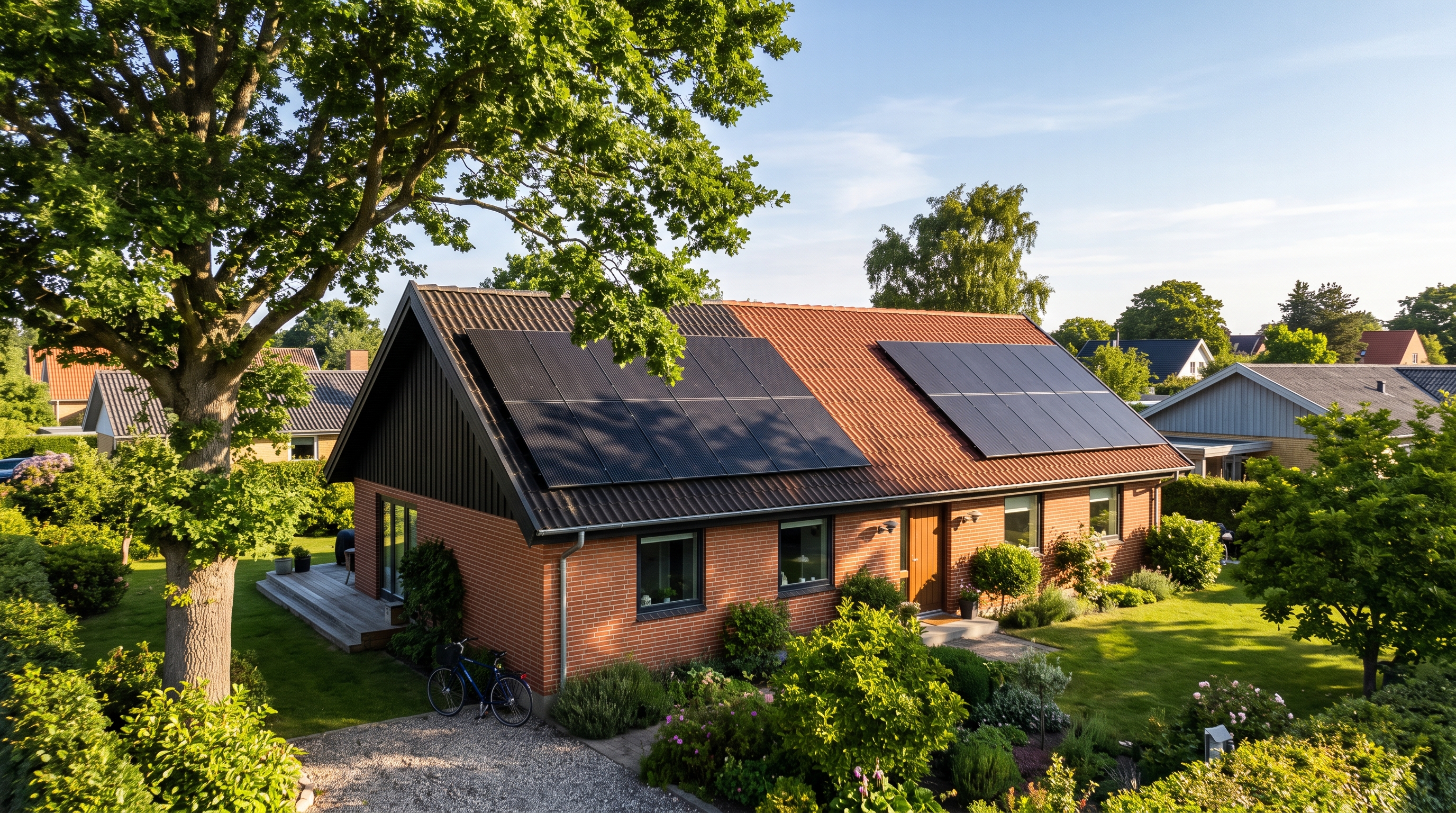
Solar Panels and Shade: How to Maximise Power Output - Even with Nearby Trees
Solar Panels and Shade: How to Maximise Power Output - Even with Nearby Trees
Many homeowners across the UK and Ireland dream of solar panels but hesitate. The thought often goes: "My roof gets shade from the neighbour's large birch in the afternoon, so it can't really pay off, can it?" That concern is understandable, but fortunately no longer as relevant as it was five years ago. Technology has moved on dramatically.
The truth is, modern solar panel systems are far more resilient to shade than most people realise. And with the right components, you can get solid output - even if your roof doesn't bask in full south-facing sun all day.
Why Shade Is a Problem for Solar Panels
Let's start with the basics. Solar panels generate electricity when sunlight strikes them. If part of a panel is shaded, output drops - but the problem is worse than it sounds.
In a traditional solar array, panels are wired in series, much like old-fashioned Christmas lights. If one panel in the chain gets shade, it affects the entire string. A single branch from a tree casting shade on just 10% of one panel can, in the worst case, reduce the entire system's output by 30-40%.
That's why the old advice used to be: "You need full sun on the roof, otherwise it isn't worth it." But that old advice no longer holds.
The Solution: Optimisation Technology
There are three technologies available today, each solving the shade problem in different ways. Let's look at them.
Microinverters - the Most Shade-Resilient Option
A microinverter sits underneath each individual panel and converts solar DC power into AC power right at the panel. This way, every panel operates independently of the others. If one panel is shaded, the rest carry on unaffected.
The advantage is obvious: you only lose output on the panel that's actually shaded. The rest of your system delivers full power.
Microinverters are particularly well-suited to roofs with complex shading - for example, homes surrounded by large trees, or roofs with dormers and chimneys casting shadow at different times of the day.
Power Optimisers - the Best of Both Worlds
Power optimisers are a middle ground. They also sit under each panel and optimise the voltage individually, but instead of converting the power at the panel, they send it on to a central inverter.
You get panel-by-panel optimisation, but at a lower cost than a full microinverter system. This is currently the most common solution for partially shaded roofs across Europe, and it's the option typically recommended when shading isn't too dominant.
Bypass Diodes - the Built-in Protection
All modern panels have built-in bypass diodes. They act as a "detour" for the current when part of the panel is shaded. It's better than nothing, but far less effective than microinverters or power optimisers, because you still lose output across the entire affected panel section.
The Advantage of Newer Panels
Here's a detail worth noting: the latest solar panels, particularly those with so-called half-cut technology, handle shade significantly better.
A half-cut panel is split into two halves that work independently. If the lower half is shaded, the upper half still produces at full capacity. This means that even without additional optimisation equipment, modern panels perform far better in shade than older models.
What Does Optimisation Equipment Cost?
The price difference between a standard system and a shade-optimised system has narrowed over the years. Here's a realistic picture for a typical 4 kW system:
| Solution | Extra Cost | Recommended For |
|---|---|---|
| Standard (no optimisation) | £0 | Full sun, no shade |
| Power Optimisers | £350-£500 | Light to moderate shade |
| Microinverters | £700-£1,000 | Heavy, complex shade |
For most UK homes with a couple of shade-casting trees or a dormer window, power optimisers offer the best economic solution. The extra cost of £350-500 typically pays for itself within 2-3 years through increased generation.
How to Assess the Shade on Your Roof
Before you start worrying about whether shade is a problem, here's a practical checklist:
- Morning and evening shade is less critical than midday shade. The sun is lower, and output is naturally lower during those times anyway. It's the shade between 10am and 2pm that you should be most concerned about.
- Deciduous trees are a seasonal problem. In winter, when the trees are bare, shade is minimal - and ironically, winter is precisely when electricity prices are often highest and you most need your own generation.
- Building shadow is the worst kind. Shade from neighbouring houses, garages, or chimneys is permanent and doesn't disappear with the seasons. Optimisation is especially important here.
- Get a professional assessment. An experienced solar installer can carry out a shade analysis showing exactly how shadow moves across your roof throughout the day and year.
How EcoRay Approaches This
When you get a quote from EcoRay, a detailed shade analysis is part of the assessment as standard. We use 3D modelling of your roof combined with local solar-path data to calculate the precise production loss from shading - and crucially: what it costs you, and what you can do about it.
We then recommend the solution that gives you the best return. Sometimes it's microinverters, more often it's power optimisers, and occasionally - if your roof is actually free and clear - you don't need extra optimisation at all.
The point is, you get a data-driven answer, not a gut feeling.
Summary: Three Things to Remember About Solar Panels and Shade
- Modern technology has changed the game. Shade is no longer a dealbreaker - it's a technical problem with a technical solution.
- Panel-by-panel optimisation (power optimisers or microinverters) means only the shaded panel loses output. The rest carry on unaffected.
- Investing in optimisation pays off if your roof has shade. The extra cost of £350-1,000 is small compared to the increased generation over the system's 30+ year lifespan.
Dreaming of solar panels but worried about the shade from your garden's old oak tree? Let's take a look at your roof. It's free and no-obligation - and the answer may be more positive than you think.
This article is part of EcoRay's knowledge series on solar panels and green energy for homes. Have questions? Contact us at hello@ecoray.dk or visit ecoray.dk.