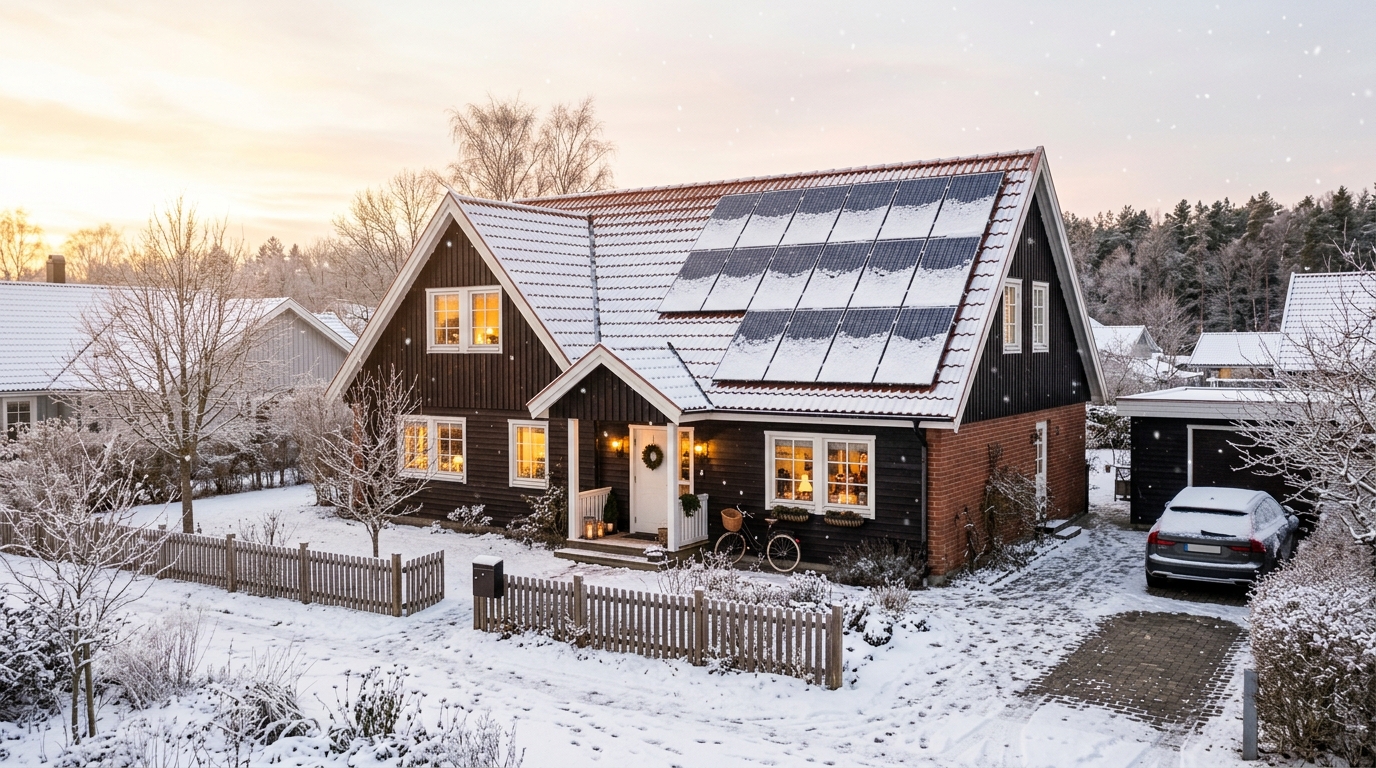
Solar Panels Winter Production: How Much Do They Generate in the UK?
Solar Panels Winter Production: How Much Do They Generate in the UK?
Most people assume solar panels produce almost no electricity in winter. This is a myth. Even during the darkest months, a well-designed solar PV system in the UK can make a meaningful contribution to your household’s electricity use. In 2026, a south-facing 6 kW system with a good roof pitch is expected to generate between 180 and 280 kWh per month in December and January, depending on location and weather.
This article explains what you can realistically expect from solar panels in the British winter, which factors matter most, and how combining them with battery storage and smart optimisation can dramatically improve performance during the short days.
How Much Do Solar Panels Produce in Winter in the UK?
Based on data from systems installed in 2024-2025 and projected efficiency improvements for 2026, a typical 6 kW south-facing system with a 35-40° roof pitch is expected to produce:
- December: 160-240 kWh
- January: 180-270 kWh
- February: 280-420 kWh
This represents roughly 4-9 % of annual output during the three darkest months. Although significantly lower than in summer, it is still enough to cover a large portion of a modern home’s daytime electricity use - powering LED lighting, TVs, routers, washing machines, and heat pumps.
Properties in northern England and Scotland will typically see figures towards the lower end due to increased cloud cover, while systems in the South West, South East and East Anglia more often achieve the higher end of the range.
What Affects Solar Panel Performance in Winter?
Several practical factors determine winter output.
1. Low Sun Angle and Short Days
The winter sun sits low in the sky. South-facing panels with a steeper pitch (35-45°) perform significantly better than those on flatter roofs. A 40° tilt can deliver up to 25 % more generation in December compared with a 15° tilt.
2. Snow and Frost
Modern solar panels with anti-reflective and hydrophobic coatings typically lose only 5-15 % production with light snow. When the sun appears, snow often slides off within a few hours. Panels with black backsheets and frames clear faster than older blue models.
3. Temperature
Solar panels actually perform better in cold temperatures. At 0°C a panel produces more power than at 25°C under the same sunlight. This makes cold, bright winter days some of the most efficient per hour of sunlight.
4. Orientation and Location
- South: Best overall winter production
- East or West: 10-20 % less in winter months, but often better for self-consumption if you’re home in the morning or afternoon
- North: Not recommended for year-round generation
How to Significantly Increase Your Winter Production
Several upgrades make excellent sense in 2026:
- Battery Storage: A 10-13.5 kWh battery (such as a Tesla Powerwall, GivEnergy, or Sunsynk) lets you store surplus electricity generated between 10 am and 3 pm and use it in the evening. Adding a battery can increase self-consumption in winter from around 35 % to over 70 %.
- Microinverters or Power Optimizers: Panels fitted with individual optimisers (e.g. SolarEdge or Enphase) lose far less output when partially shaded or covered by snow on individual panels.
- Cleaner Panels: Regular cleaning (manual or automatic) removes dust, pollen and algae that can reduce winter output by 5-8 %.
- Hybrid System with Heat Pump: Pairing your solar array with an air-source heat pump allows you to use winter generation directly to run the heat pump during daylight hours, significantly cutting your electricity bill.
Read more about choosing the right solar PV system here.
Realistic Annual Output and Winter Share in 2026
A well-installed 6 kW solar system in the UK is projected to generate between 6,200 and 7,800 kWh per year depending on location. The winter period (Dec-Feb) typically accounts for 12-15 % of total annual production when correctly designed.
This means you can expect 700-1,000 kWh from a 6 kW system across the three darkest months. For a well-insulated home with an annual consumption of 4,000-5,000 kWh, this makes a noticeable difference to your electricity bill.
Economics and Payback with Focus on Winter Production
Although summer production is higher, electricity prices have historically been at their highest in the winter months. In 2024-2025, average prices in December and January were often 30-70 % higher than in July. This trend is expected to continue.
Every kWh generated in winter therefore carries more financial weight than one produced in summer. With current incentives, battery support schemes and expected 2026 electricity prices, the simple payback period for a complete solar and battery system typically sits between 5.5 and 7.5 years for an average UK home.
Get a quick, realistic estimate using our solar panel calculator.
What Does the Future Hold for Solar in Winter?
In 2026, new panel technologies with superior low-light performance (PERC, TOPCon and HJT cells) are expected to boost winter production by 8-12 % compared with 2023 models. At the same time, batteries are becoming both cheaper and more efficient, driving self-consumption even higher.
This makes solar PV an increasingly attractive investment for homeowners who want to reduce their reliance on the national grid during the winter months.
Read more about financing solar panels and batteries here.
Frequently Asked Questions
How much do solar panels produce in December in the UK?
A typical 6 kW system is expected to generate between 160 and 240 kWh in December 2026. This equates to roughly 5-8 kWh per day on average, but can exceed 15 kWh on clear days.
Is it worth investing in solar panels if you only care about winter production?
Yes - especially if you add battery storage and your consumption pattern matches daytime generation. Higher winter electricity prices mean each kWh is worth more. A complete system with battery storage can still achieve a payback period of under 8 years.
Does cleaning solar panels in winter help?
Yes. Dust, pollen and algae left over from autumn can reduce output by up to 8 %. A clean in November or January often pays for itself quickly through increased winter generation.
Will there be grants for batteries in 2026?
Yes. Support schemes and favourable financing options for battery storage are expected to continue. Check the latest incentives in our knowledge centre.
If you want to know exactly how much a solar and battery system would produce at your address - both summer and winter - use our free solar calculator. You’ll get results in under 30 seconds and can then book a no-obligation consultation with one of our specialists.
Visit our solar panel calculator and get clarity on your potential savings today.