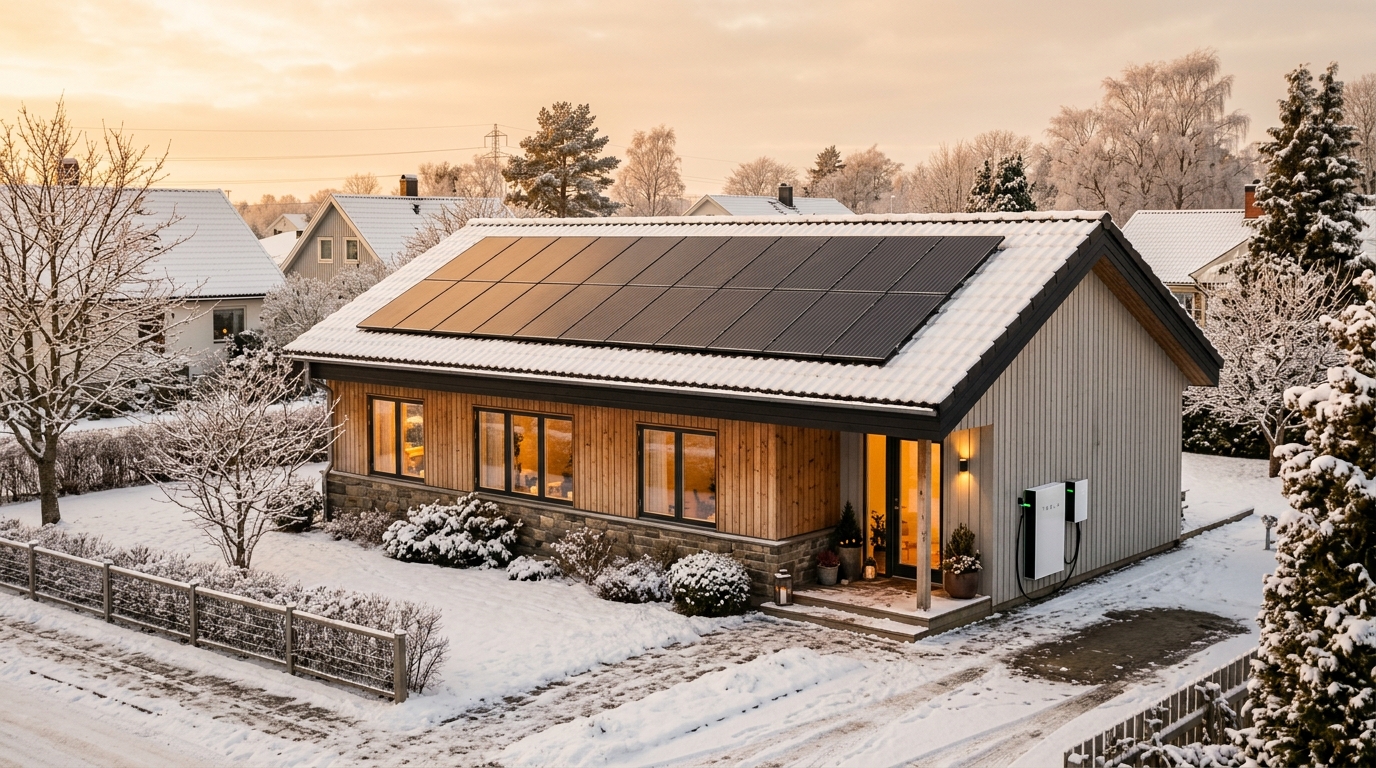
Solar Panels and Home Batteries: A 2026 Guide for Homeowners
Solar Panels and Home Batteries: A 2026 Guide for Homeowners
Do solar panels work in winter?
One of the most common questions we hear is whether solar panels produce anything at all during the darker months, and whether a home battery can help carry a household through winter. The honest answer is yes — they still generate, but far less than in summer.
On UK and Irish latitudes, solar irradiance drops sharply from November to February. A system that produces 800–900 kWh in June will often deliver only 40–135 kWh in December. Production doesn't stop, but it is heavily reduced. As a rule of thumb, winter output falls to roughly 5–15% of the summer peak.
What's reassuring is that panels hold their performance for a long time. A well-installed system keeps stable output for 25–30 years, with slow, predictable degradation. The seasonal swing — not panel age — is the real challenge at northern latitudes.
What affects winter output?
- Low sun angle and short daylight hours
- Cloud cover and rainfall
- Occasional snow on panels
- Cooler temperatures (which actually slightly improve efficiency)
The role of a home battery in the winter months
A battery can't cover your entire winter consumption on its own, but it reduces how much grid electricity you buy at the most expensive times. A typical 10–15 kWh battery can shift 200–400 kWh per month during winter, depending on your usage pattern — most valuable when the electricity price is high.
Batteries charge during the midday solar peak and discharge in the evening when most households use the most power. Homes with an electric car or heat pump benefit most, because they have heavy evening consumption.
Why combine solar panels with a battery?
- Use surplus power from spring and autumn
- Cut your dependence on expensive evening grid power
- Get more value from your own generation year-round
- Optional backup during short power cuts
We're brand-independent: we only recommend storage when the numbers show it makes sense for your specific consumption.
Technology and innovation in 2026
Panel efficiency continues to improve. Panels at 22–23% efficiency are now standard, compared with 18–19% five years ago. Hybrid inverters are smarter too: they automatically decide when to store power and when to export it.
Battery warranties typically run 10–15 years, with 70–80% residual capacity guaranteed. That's worth factoring in when you compare systems.
Solar only vs. solar + battery
- Solar only: lowest upfront cost, but higher grid purchases in winter
- With battery: higher upfront cost, but better self-consumption and a lower annual bill
- Hybrid setup: best for homes with an electric car or heavy evening usage
Common myths about winter solar and batteries
A widespread myth is that solar panels are useless in the UK and Ireland from October to March. The data shows otherwise: even in December, an average system still produces 5–8% of its annual total.
Another myth is that batteries always pay for themselves. For households with low evening consumption and cheap electricity, the payback period can stretch beyond 12 years — which is why we recommend storage only when the usage profile fits.
Is a battery right for you?
The answer depends on your consumption, roof orientation, and how much you want to reduce grid purchases. A battery raises self-sufficiency but also raises the upfront investment. That's why we always start with a calculation for your specific address.
Use our solar calculator to see realistic winter and summer production figures, or explore battery options in more detail.
Frequently Asked Questions
Do solar panels produce power in winter?
Yes — but output falls to roughly 5–15% of summer levels in December and January due to low sunlight. Many homeowners add a battery to store surplus from brighter months.
Is a battery necessary to benefit from solar panels?
No, but a battery helps you use your own power during winter and at the most expensive times of day, reducing what you buy from the grid.
How long do solar panels and batteries last?
Solar panels typically deliver stable output for 25–30 years. Home batteries usually carry a 10–15 year warranty with 70–80% residual capacity.
Note: all figures are indicative and depend on your roof orientation, tilt, shading, and consumption. A personalised calculation gives the most accurate picture.
Ready to work out what's realistic for your home?
Visit our solar calculator or book a free, no-obligation consultation today.