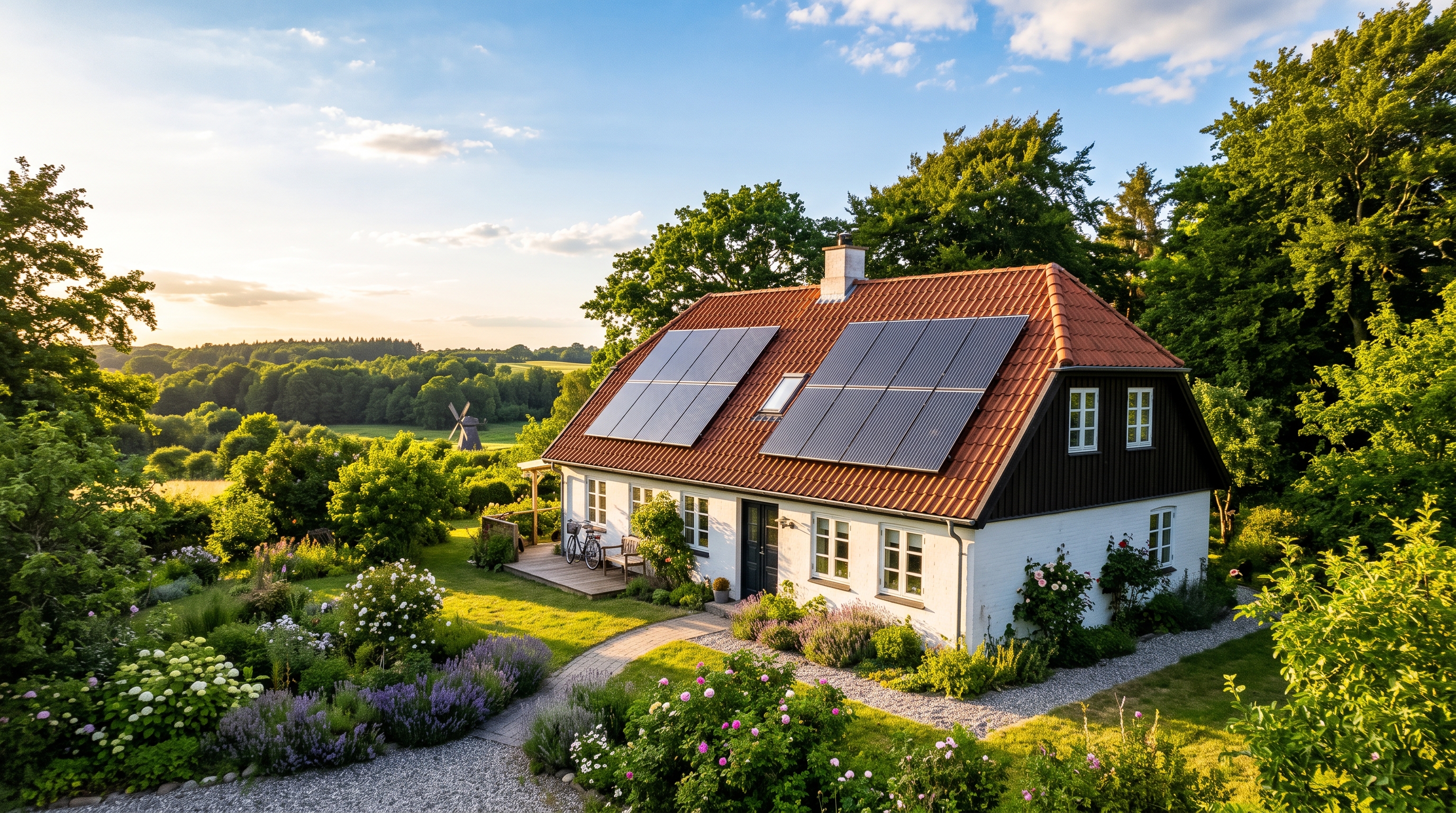
How Solar Panels Reduce Your CO2 Emissions: 5.2 Tons Saved Annually
5.2 Tons of CO2 Per Year: The Tangible Climate Impact of Solar Panels
When homeowners consider solar panels, the electricity bill is usually the first thing on their mind. But the climate calculation is just as compelling. A typical 10 kWp system on a Danish home produces roughly 10,000 kWh per year. Because the Danish electricity mix still includes fossil fuel sources — and because Denmark imports electricity from coal and gas-powered grids when the wind isn't blowing — every solar-generated kWh displaces approximately 520 grams of CO2 compared to average grid electricity. That adds up to an annual CO2 saving of 5.2 tons — equivalent to what 260 trees absorb in a year.
For comparison, the average person saves about 1.5 tons of CO2 annually by cutting out beef, and roughly 0.8 tons by switching from a petrol car to an electric vehicle. Solar panels on your roof deliver more than three times the climate impact of a dietary change — and they do it year after year, for at least 30 years.
The Carbon Payback: From Manufacturing to End of Life
A critical question environmentally conscious buyers ask is: what about the CO2 emitted during manufacturing? It's a fair question — and the answer is encouraging.
Producing a 10 kWp system emits roughly 8-10 tons of CO2, accounting for silicon extraction, wafer production, module assembly, and transport. But with annual savings of 5.2 tons, the system becomes carbon-neutral after under 2 years of operation. From that point on, all the electricity it generates is a net climate benefit for the remaining 28+ years of its lifespan.
- Carbon payback time: 1.5-2 years for modern N-type panels
- Net CO2 savings over 30 years: Approximately 146 tons
- Petrol car equivalent: Driving 360,000 miles in a mid-size car
- Flight equivalent: 29 return trips London-New York
Modern N-type panels, which EcoRay typically recommends, have an even shorter energy payback time because they're more efficient. Higher efficiency means more electricity per panel — and a faster path to a positive carbon balance.
Why the Grid Mix Makes Solar Extra Climate-Friendly
The CO2 savings from solar panels depend on what electricity they displace. In Denmark, the situation is particularly favourable because the grid still imports power from coal and gas-reliant countries during calm weather.
The average carbon intensity of Danish grid electricity is approximately 520 gCO2/kWh according to the Danish Energy Agency's latest figures. When solar panels generate electricity during daytime hours, they displace the most expensive — and typically most carbon-intensive — generation. This means each solar kWh in practice saves more CO2 than the average figure suggests.
Energinet expects the grid to become greener over time, but electricity demand is also growing significantly with the electrification of transport and heating. Solar panels will continue to have a substantial climate impact throughout their lifespan.
Battery Storage Makes the Climate Benefit Even Greater
Without a battery, a typical solar system exports 40-60% of its production to the grid because consumption and generation don't always align in time. With a battery, you can store surplus electricity for evening hours, when the grid is most carbon-intensive.
A 10 kWh battery increases self-consumption from roughly 40% to 75-85%. This delivers two climate benefits:
- More direct CO2 displacement: You use your own green electricity when the grid is at its dirtiest
- Grid relief: Less need for peaking power plants, which often run on gas
The additional climate benefit from a battery is roughly 1.2-1.8 tons of extra CO2 savings per year, depending on your consumption patterns. This makes the solar-plus-battery combination the most climate-effective solution for private homeowners.
How to Maximise the Climate Impact of Your Solar Panels
1. Choose High-Efficiency Panels
Modern N-type panels with 22-23% efficiency produce more electricity per square metre and have a shorter carbon payback time than older P-type panels. The difference can be 8-12% more production on the same roof area.
2. Optimise Placement and Angle
South-facing panels with a 35-40° tilt deliver the highest yield in northern European climates. But east-west orientation can also deliver strong production — and spreads generation better across the day, increasing self-consumption.
3. Invest in a Battery
As mentioned, a battery significantly increases the climate benefit by shifting consumption to hours when the grid is most carbon-intensive. It's good for both the climate and your energy bill.
4. Monitor Your Consumption
Modern Home Energy Management Systems (HEMS) give you insight into when you produce and consume electricity. By shifting your usage — running washing machines and dishwashers during midday — you can increase the climate benefit by 10-15% without changing your lifestyle.
5. Think Long-Term
Solar panels are a 30+ year investment. The next three decades bring electrification of the vehicle fleet, phasing out of gas boilers, and rising electricity demand. Your solar panels will become more valuable — both economically and climatically — as society electrifies.
Frequently Asked Questions About Solar Panels and CO2
How long does it take for solar panels to become carbon-neutral?
For modern N-type panels, it takes roughly 1.5-2 years. This covers the entire production chain from raw materials to a mounted system on your roof. After that, the panels generate green electricity for at least 28-30 years with no additional carbon emissions.
Are solar panels still climate-friendly on a grey winter day?
Yes. Even though production is lower in winter, modern panels still generate electricity in diffuse light. A 10 kWp system typically produces 400-800 kWh during December-February. And because the grid is most carbon-intensive in winter — when wind turbines produce less and imports increase — every winter kilowatt-hour has an even greater climate impact.
What happens to the panels after 30 years?
Modern solar panels are 94-96% recyclable. Glass, aluminium, and silicon can be separated and reused in new panels or other products. The EU's WEEE Directive requires manufacturers to take back panels and ensure proper recycling. EcoRay partners with certified recycling companies to ensure panels get a circular life after their time on your roof.
The Carbon Calculation in Numbers: Summary
- Annual CO2 savings: 5.2 tons (10 kWp system)
- Total savings over 30 years: Approximately 146 tons
- Carbon payback time: Under 2 years
- Equivalent to planting: 260 trees per year
- Recycling rate: 94-96% after end of life
If you'd like a precise carbon calculation for your own home, use EcoRay's solar calculator. It takes your roof angle, orientation, and consumption patterns into account and gives you a personalised carbon report alongside the financial calculation.
Calculate your CO2 savings now →
By KlimaKlaus, EcoRay's AI-powered energy advisor