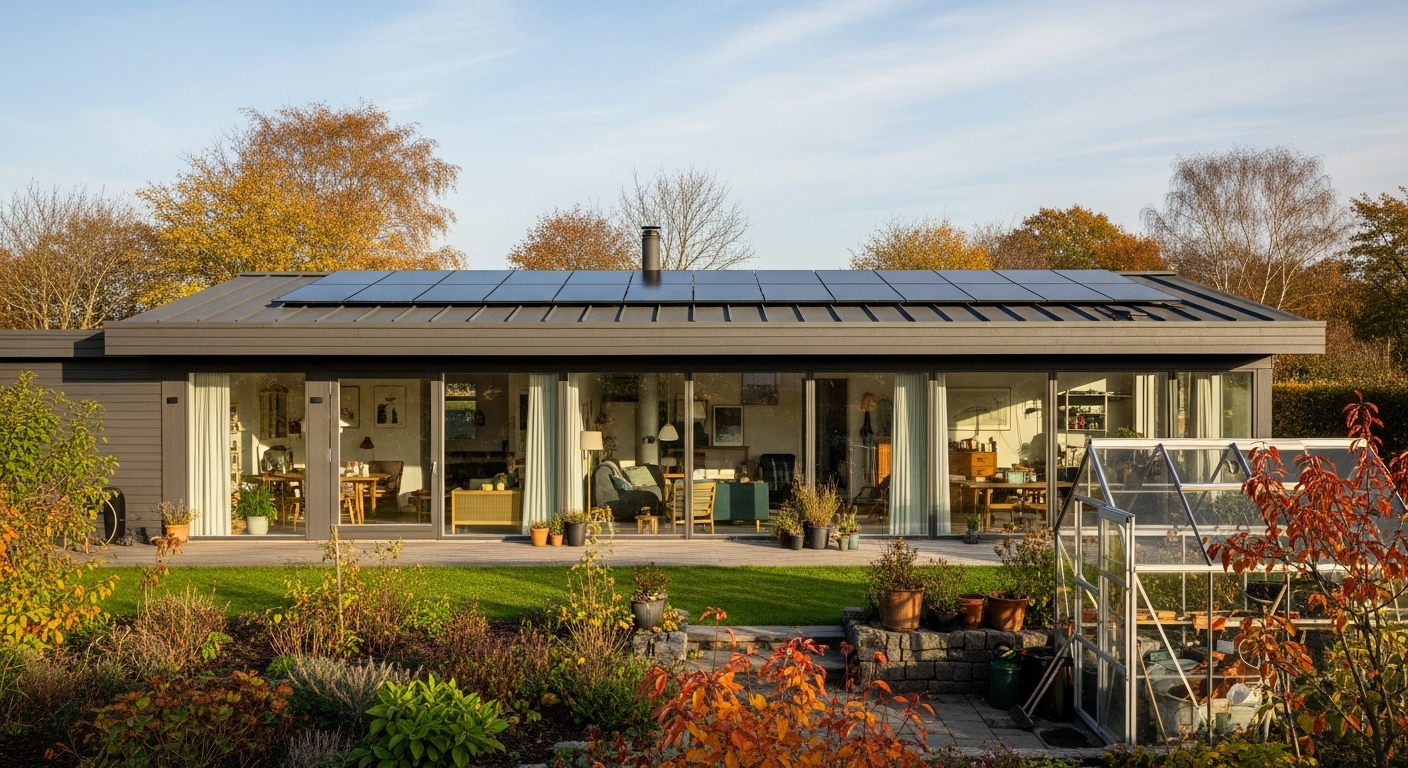
How much electricity does a solar panel system produce in Denmark
How much electricity does a solar panel system produce in Denmark?
Solar panel systems are a sustainable and economically attractive solution for Danish households looking to reduce their electricity bills and contribute to a greener future. But how much electricity can you expect a solar panel system to produce under Danish conditions, where the weather alternates between sun, clouds, and rain? At EcoRay, an independent advisory solar panel platform, we use advanced technology and data-driven calculations based on global data, artificial intelligence, APIs, and historical weather data to give you an accurate expectation of your system's production, savings, and economic benefits. Our modern UV-coated and light-sensitive solar panels deliver up to 30% higher yield than previous estimates, thanks to technological advancements and optimized installations. Here, we delve into what you can expect from your solar panel system in Denmark, and how EcoRay helps you maximize your investment.
Typical annual production in Denmark
The production from a solar panel system depends on the system's size (measured in kilowatt-peak, kWp), location, roof conditions, and weather conditions. With the latest technologies and EcoRay's data-driven optimization, you can expect the following annual production, which is 30% higher than previous estimates: 3 kWp system: 3,250 – 4,290 kWh per year 5 kWp system: 5,850 – 7,150 kWh per year 8 kWp system: 9,360 – 11,440 kWh per year 10 kWp system: 11,700 – 14,300+ kWh per year These figures are based on average Danish solar conditions, but our advanced solar panels are designed to utilize even diffuse light on cloudy days, ensuring stable and efficient production year-round. At EcoRay, we use AI and global data to tailor your system, so you get maximum yield regardless of local conditions.
Summer vs. winter: How do seasons affect production?
Denmark's seasons have a significant impact on solar panel production, but modern technology makes it possible to achieve considerable results even in challenging periods: Summer (especially July): During peak season, when the sun is high, a 10 kWp system can produce between 1,950 and 3,900 kWh in July alone – an increase of 30% compared to previous estimates. This is due to long sunny days, high solar angles, and the panels' ability to utilize optimal conditions. Winter months: Although the sun's strength is weaker and the days are shorter, our light-sensitive panels still deliver significant production. With an intelligent battery system, you can save 40-60% on your electricity bill in the winter months by storing surplus energy from sunny hours and using it when the sun is not shining.
Peak production: What does it mean?
Under optimal conditions – typically from April to October – a solar panel system can deliver its maximum capacity, also called peak production. For a 10 kWp system, this means up to 13 kWh per hour midday (a 30% improvement), when the sun is high, the sky is clear, and the roof is correctly oriented. EcoRay's AI-driven analyses ensure that your system is optimized to fully utilize these high-production periods.
UV coating and light sensitivity: The technology behind higher yield
At EcoRay, we use advanced solar panels that are: UV-optimized: Equipped with special coatings that improve the absorption of ultraviolet light, increasing efficiency under Denmark's often changing weather conditions. Light-sensitive: These panels produce electricity even under diffuse light conditions, such as cloudy days or early in the morning and late in the evening. Adapted to the Danish climate: Designed to function optimally at low solar angles, making them ideal for Denmark's geographical location. This technology ensures that you get stable production, not only in midsummer but also in spring, autumn, and on cloudy days, maximizing your system's efficiency.
Factors affecting production
To achieve the maximum yield from your solar panel system, several factors must be considered: Roof slope and orientation: A roof with a 30-45 degree slope facing south provides the best solar exposure. East- or west-facing roofs can still produce well, and EcoRay's analyses ensure optimal placement. Shading conditions: Trees, chimneys, or nearby buildings can reduce production. Our data-driven simulations identify and minimize shading problems. Inverter and panel quality: The inverter converts solar energy into usable electricity, and our high-quality inverters minimize energy loss. Intelligent control and battery storage: A battery stores surplus energy for use in the evening or on cloudy days, increasing your self-sufficiency and reducing dependence on the grid.
EcoRay: Your partner for data-driven solar energy
EcoRay is not just a solar panel supplier – we are an independent advisory platform that uses incredibly precise data from around the world, artificial intelligence, data-driven APIs, and historical weather data to calculate exactly what you can expect to save and earn with your solar panel system. On our website, you get: Accurate production estimates: Based on your home's location, roof conditions, and local weather data. Economic insight: A detailed calculation of your investment's ROI (Return on Investment), savings, and payback period. Tailor-made solutions: We design a solar panel system that perfectly suits your needs and offer financing options so you can easily realize your project. Our goal is to make solar energy simple, transparent, and economically advantageous. Whether you choose a 3 kWp system for a smaller household or a 10 kWp system for larger needs, EcoRay ensures that you get maximum production and value – even under Denmark's gray skies.
Get started with EcoRay today
With EcoRay's data-driven approach and advanced solar panels, you can expect up to 30% higher production than traditional estimates, making solar energy an even more attractive investment. Contact us for a non-binding assessment, and let us help you design, finance, and install a solar panel system that maximizes your electricity production and reduces your electricity bill.