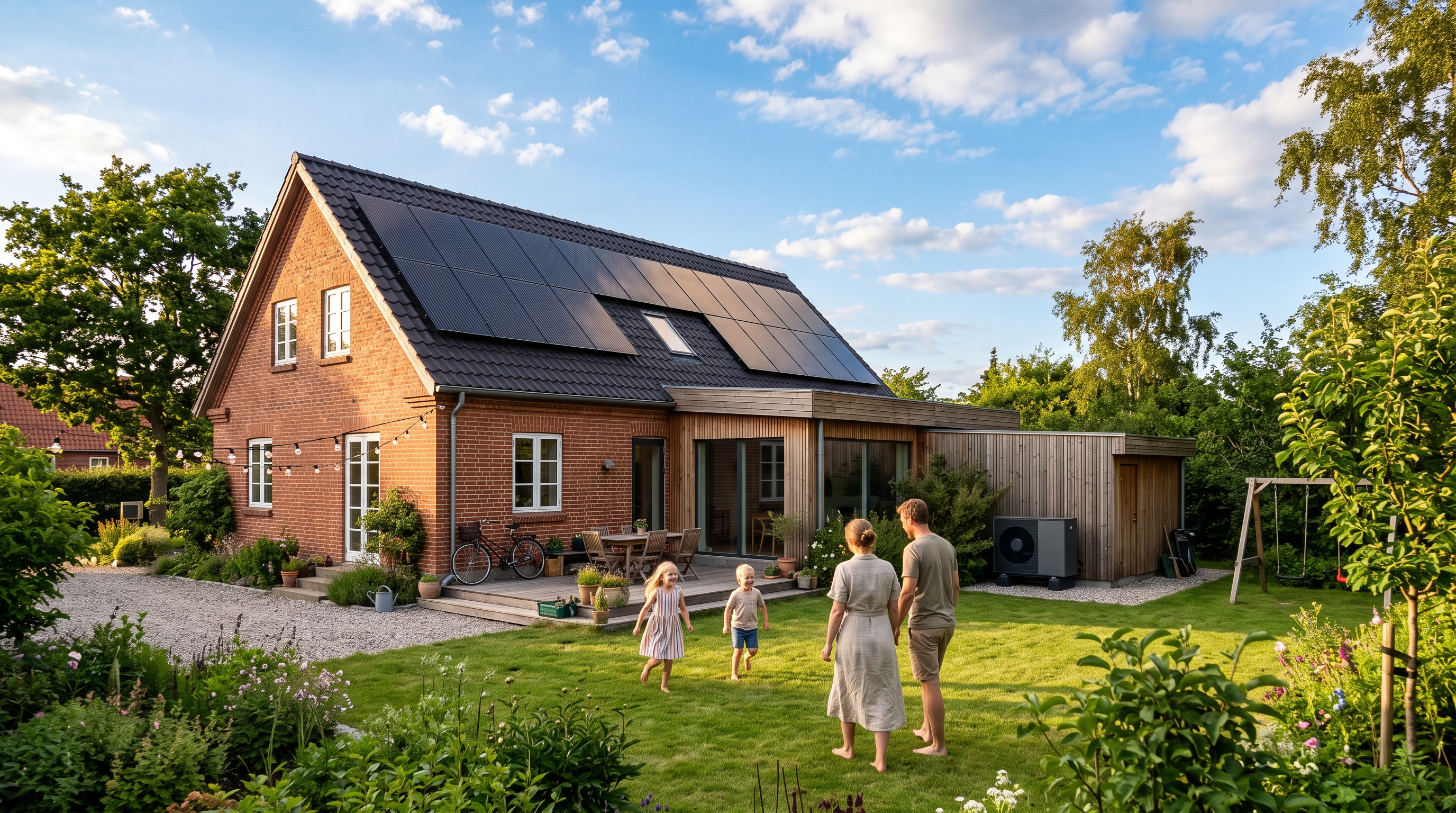
Heat Pump and Solar Panels: The Ultimate Combination for Your Home in 2026
Heat Pump and Solar Panels: The Ultimate Combination for Your Home in 2026
A heat pump warms your home. Solar panels generate electricity. But what happens when you combine them? Think strawberries and cream — excellent on their own, unbeatable together. For a typical UK family, the combination can mean annual savings of over £1,800 and a carbon footprint that practically vanishes.
Here's your complete guide to how heat pumps and solar panels work together, what it costs, what you save, and what to watch out for — especially with children in the household.
Why Is the Combination So Effective?
The answer lies in timing. An air-to-water heat pump uses most electricity in winter when heating demand peaks. Solar panels generate most electricity in summer when the sun is high. At first glance that looks like a mismatch. But with smart controls and optionally a battery, you can optimise the interaction significantly.
The three key benefits:
- Summer: Solar panels produce surplus electricity covering the heat pump's hot water demand and the rest of the household consumption. Excess power is exported to the grid.
- Spring/Autumn: Solar panels cover a large share of the heat pump's daytime consumption, especially if you're at home (parental leave, remote work, young children).
- Winter: The heat pump draws most from the grid here, but it uses only around a quarter of the energy compared to direct electric heating — so even without sun, it helps the bills.
Real example: A 150 m² detached home with an air-to-water heat pump uses roughly 5,000 kWh of electricity per year for heating and hot water. With an 8 kW solar array (around 20 panels), you can generate approximately 7,500–8,000 kWh annually. Over 60% of the heat pump's consumption can be covered directly or indirectly by your own solar panels.
What Does It Cost? Investment and Payback Time
| Component | Price (incl. VAT and installation) |
|---|---|
| Air-to-water heat pump | £7,000 – £12,000 |
| 8 kW solar array (20 panels) | £6,000 – £9,000 |
| Battery (5–10 kWh, optional) | £2,500 – £5,000 |
| Total (without battery) | £13,000 – £21,000 |
| Total (with battery) | £15,500 – £26,000 |
For a family with annual electricity consumption of 6,000 kWh (including the heat pump), the numbers look like this:
| Item | Amount |
|---|---|
| Electricity without solar (6,000 kWh × £0.25) | £1,500 |
| Electricity with solar (2,500 kWh × £0.25) | £625 |
| Export income (3,500 kWh × £0.15) | −£525 |
| Total annual electricity bill | £100 |
| Annual saving | £1,400 |
Add the heating saving: switching from a gas boiler to a heat pump saves an additional £600–£900 per year. The total annual saving lands at £2,000 – £2,300.
Payback time with both: 8–12 years. After that, it runs almost free for the system's remaining lifespan (another 15–25 years).
Smart Controls: Get the Most from Your Combination
To maximise the interplay between heat pump and solar, you need intelligent controls. This can be done at several levels:
1. Heat Pump Timer
Most modern heat pumps can be programmed to produce hot water and heating when the sun is shining. Set the hot water tank to heat up during the middle of the day instead of overnight.
2. HEMS (Home Energy Management System)
A HEMS connects solar panels, heat pump, battery, and EV charger, optimising consumption automatically. Systems like MyEnergi or SolarEdge can shift your consumption to the hours when electricity is cheapest — or greenest.
3. Battery Storage
With a 5–10 kWh battery, you can store the day's surplus production for evening hours when the family is gathered and consumption peaks (cooking, dishwasher, TV, kids' screen time). The battery raises your self-sufficiency from around 35% to 60–70%.
4. EV as Battery (V2G)
If you have an electric car, it can function as a massive battery on wheels. With vehicle-to-grid (V2G) technology — which is rolling out across the UK and Europe — your car can store solar power during the day and feed it back to the house in the evening.
Special Considerations for Families
As a parent, you know children change everything — including energy usage. Here's what to consider:
- Hot water: Families with children use 50–100% more hot water than adults without kids. Ensure the hot water tank is sized for 200–300 litres.
- Underfloor heating: Small children on the floor = higher comfort temperature demands. Underfloor heating works perfectly with heat pumps because it runs at lower flow temperatures, boosting the heat pump's efficiency.
- Indoor climate: Heat pumps filter and circulate the air. That means fewer humidity issues and a healthier indoor environment — a bonus if your children have asthma or allergies.
- Future-proofing: Your children grow, and household energy use changes. A modular solar array can be expanded later, and the heat pump can be upgraded via software.
- Noise: The outdoor unit emits 35–50 dB (similar to a fridge). Position it away from bedroom windows.
The Order Matters
Should you install a heat pump or solar panels first? The short answer: heat pump first.
When you switch from a gas boiler to a heat pump, your electricity consumption increases significantly. That gives you a much better basis for correctly sizing the solar array. If you install solar panels first, you risk under-sizing — and miss out on savings.
Optimal sequence:
- Heat pump (turn your heating bill into savings from day one)
- Solar panels (cover the new, higher electricity consumption)
- Battery (optimise self-sufficiency when finances allow)
- EV + charger (use surplus power for transport)
Grants and Incentives in 2026
In 2026 there are still attractive conditions for green investments:
- Boiler Upgrade Scheme (UK): Grants of up to £7,500 for air-source heat pump installations replacing fossil fuel boilers.
- SEAI Grants (Ireland): Up to €6,500 for heat pump installation plus €2,100 for solar PV.
- 0% VAT: Both heat pumps and solar panels benefit from 0% VAT on installation through 2027.
- Smart Export Guarantee (SEG): Earn money for every kWh you export to the grid — rates vary by supplier but typically £0.12–£0.15/kWh.
- Green Mortgages: Several UK banks now offer preferential rates for energy-efficient homes or home improvement loans for green upgrades.
Frequently Asked Questions
Can my heat pump run when the solar panels aren't producing? Yes. The heat pump automatically draws power from the grid when your solar panels aren't delivering enough. You never lose heating.
What happens in winter when solar panels produce less? December and January are the toughest months. Solar panels typically cover 10–15% of household consumption here. But the heat pump still uses significantly less energy than traditional heating — so you're still saving compared to gas or oil.
Do I need a battery from the start? No, it's not essential. A battery is an upgrade that increases self-sufficiency. Start with heat pump + solar panels, and add a battery later when prices have fallen further.
Is my home suitable for both a heat pump and solar panels? Most detached and semi-detached homes built from the 1970s onwards are well-suited. A heat pump requires space for an outdoor unit (roughly 1×1 metre) and an indoor unit (about 1.8 metres tall). Solar panels need a roof pitch facing south, east, or west without significant shading.
Conclusion: The Best Time Is Now
Heat pumps and solar panels are no longer future technology — they're the best investment a homeowner can make right now. Prices are at historic lows, the technology is mature, and with rising energy prices the savings only grow.
For your family, that means lower fixed costs, a healthier indoor climate, and a daily life where you're doing something concrete for the climate — without compromising on comfort.
Ready to see exactly what a heat pump and solar panel combination would mean for your home? Try our solar calculator and get a no-obligation quote in under 5 minutes.